
Dryer Vent Cleaning in Poway, CA
Call (619) 374-2025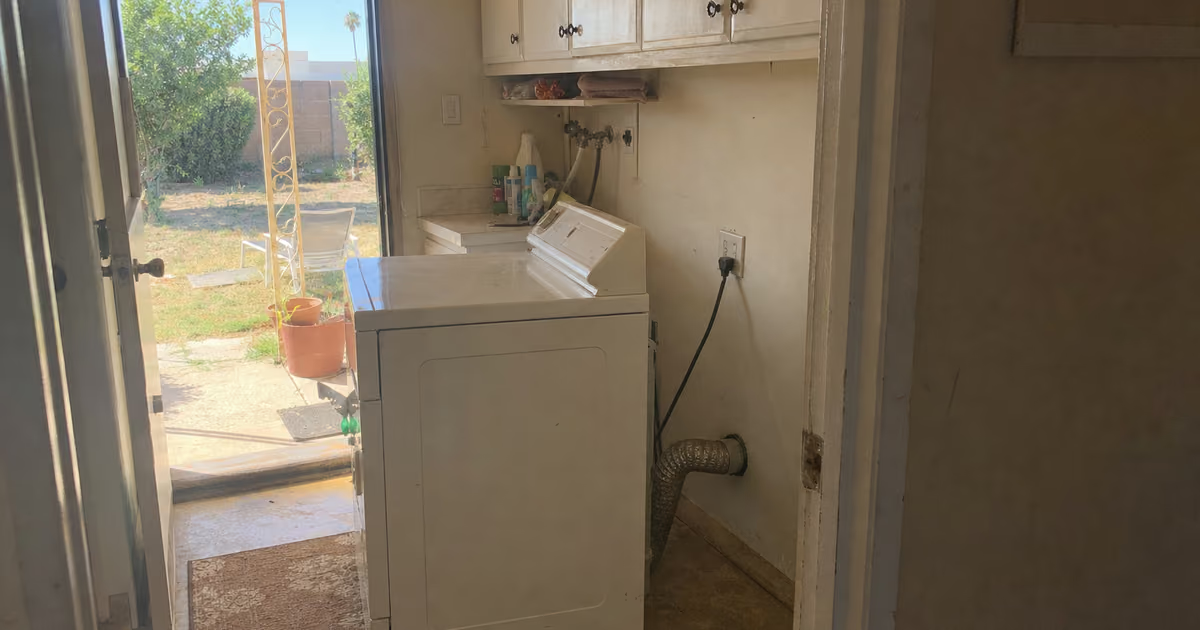
How a dryer vent job runs in Poway
The dryer gets pulled out first. We disconnect the transition hose and check it before anything else. Half the restriction usually sits right there, crushed behind the cabinet. Then the duct is brushed from the appliance end. A rotary brush on a flexible rod climbs the attic run while a vacuum holds suction at the laundry wall. Last stop is the roof cap. Flap, screen, nesting debris, packed lint at the elbow. Airflow gets checked at the termination, not guessed at from inside.
Poway sits in an Inland North County valley between 400 and 900 feet, ringed by hills. Most housing is 1970s through 1990s tract construction, plus semi-rural custom homes on larger lots. Two-story plans dominate. That means second-floor or interior laundry rooms and a long attic run to a roof cap. Long runs with elbows hold lint the way short sidewall vents never do.
The chaparral interface matters here. A lint-packed roof termination in a high-fire-severity area is a hazard pointed the wrong direction. Heavy spring pollen and decomposed granite dust off unpaved horse property in the north end both ride into the laundry room and stick to damp lint.
If the attic duct is ribbed foil and sagging, brushing it does little good. Rigid metal replacement is the honest answer.
What happens after you call us
- 1
Call and tell us your dryer brand and roughly how long the duct run is. We book a two-hour arrival window and text you when we are 20 minutes out.
- 2
We look at the hookup behind the dryer and the exterior hood, then hand you a firm price before any tool comes off the truck. Roof runs and crushed foil hose cost more than a short wall run.
- 3
We brush and vacuum the full run, run a hot cycle to check airflow at the hood, and vacuum up the lint we pulled. You pay the quoted number, nothing added at the end.
Nearby areas we also serve
In addition to Poway, we cover La Mesa, Alpine, Jamul, San Diego, Chula Vista, El Cajon.
Frequently Asked Questions
- My laundry room is upstairs and the vent goes up through the attic to the roof. Can you still clean it?
Yes, and that's the most common setup we see in Poway. Two-story plans here usually put the laundry on the second floor or in an interior hallway closet, so the duct runs through the attic and terminates at a roof cap. We clean those from both ends — brushing from the dryer connection and clearing the cap from the roof — because a long horizontal attic run with elbows traps lint in the middle where a shop vac at the dryer never reaches. If the run is especially long or has several turns, it takes more time than a short wall vent, and we'll tell you that before we start rather than after.
- We're up against the chaparral hills. Is a lint-packed roof vent actually a fire risk?
It's the reason we take roof terminations seriously here. Poway sits in a high fire severity zone with chaparral on the surrounding hillsides, and a dryer vent exit on the roof is an opening that discharges warm air and, when neglected, fine lint. Lint is one of the more readily ignitable materials in a house, and a clogged duct also raises the chance of a fire starting inside the run at the dryer. Clearing the duct all the way to the cap and making sure the cap flapper actually closes when the dryer is off is a basic part of keeping the roof side buttoned up.
- How fast can you get out here, and do you ever do same-day?
Most Poway jobs get scheduled within a few days. Same-day happens when we have an opening or we're already working in the area, which is often enough to be worth asking about. If your dryer is taking two or three cycles to dry a load, or the unit is shutting itself off partway through, say so when you call — that's a vent that's close to fully blocked and we'll move it up. Roof-terminated jobs need daylight and reasonable conditions, so a late-afternoon call on a two-story home may push to the next morning.
- What makes one Poway house cost more than another for this?
Mostly the duct run and the roof. A single-story home with a short side-wall vent is straightforward. A two-story tract home with an interior laundry, a twenty-plus-foot attic run and a roof cap takes longer and involves getting up on the roof, so it sits higher. Semi-rural custom homes on larger lots in the north part of town often have the longest runs of all, and steeper or tile roofs add time. We quote by what your actual configuration requires, not by a flat per-house number, and we look at the run before committing to a figure.
- How often should we have it done, given the dust and pollen out here?
Annually is the right baseline for most Poway households, and some need it sooner. Heavy spring pollen gets pulled into the laundry area, decomposed granite dust blows off the unpaved drives and arenas on the horse properties north of town, and family-sized laundry volume in these four- and five-bedroom tract homes means the dryer runs far more than the manufacturer's assumptions. If you're on a horse property, do laundry daily, or your home was built in the seventies or eighties and you don't know when the duct was last cleaned, start at a year and we'll tell you from what comes out whether you can stretch it.
Need dryer vent cleaning in Poway?
Call for same-day service. We give you an honest arrival window and the price before we start.
Call (619) 374-2025